Actor's Movement Studio Conservatory
2009 Summer Theater Intensive Curriculum
Five week (full-time program) June 1st to July 1st |
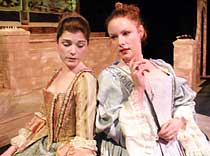
Period Style |
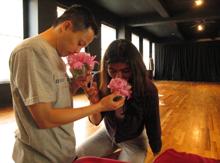
Viewpoints & Composition |
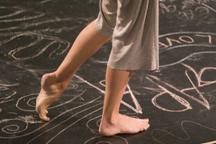
Rasa Boxes |
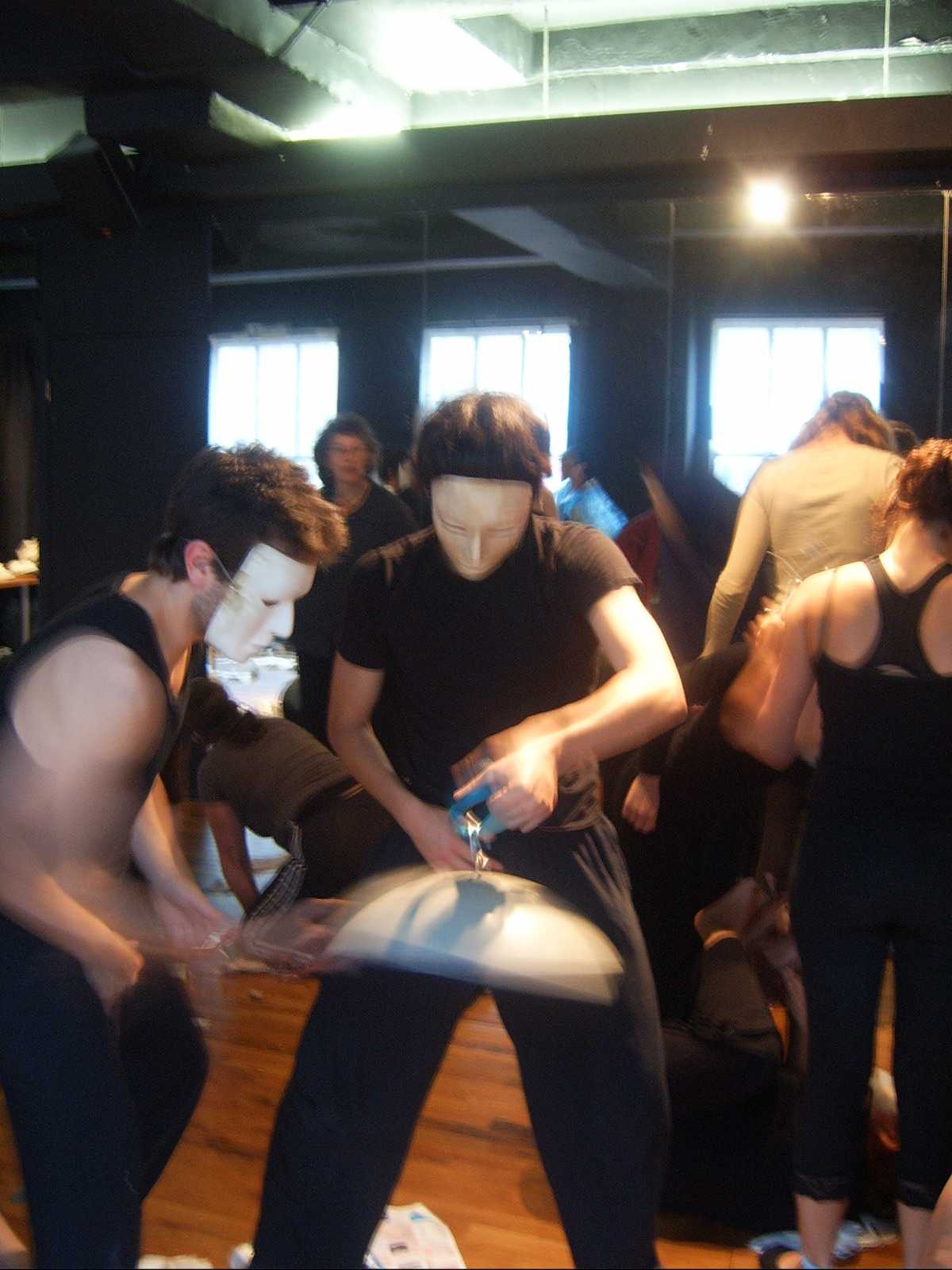
Ensemble Mask |
|
Summer 2006 Photos
Curriculum: 35 hours per week, 5 Days Core Curriculum: Rotating 4 Day Schedule
· Williamson Physical Technique
· Williamson Period Style
· Michael Chekhov Technique
· Viewpoints & Composition
Guest Artist Curriculum: 1 - 5 Day Workshops
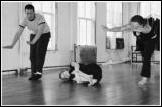 · Fitzmaurice "Voicework" Technique · Fitzmaurice "Voicework" Technique
· Mask
· Mime
· Laban & Character
· Feldenkrais Method
· Portrait Exercise |
|
New Guest Artist
 Andrew
Wade Andrew
Wade
Voice
and Classical Style Text “Shakespeare to Oscar Wilde”
Verse Consultant on the film "SHAKESPEARE IN LOVE" |
|
| CORE CURRICULUM |
| Williamson Technique |
Guest Artist: Lloyd Williamson
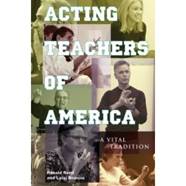
Featured in “Acting
Teachers of America” |
 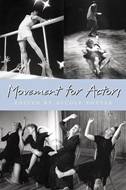 "The
body and voice...are already one instrument that is activated by the
same source with one result: the production of behavior. Integration
[of the body and the voice] is not an issue. As a physical specialist,
I'm often asked to 'just deal with the actor's body.' Experiential life
and physical life, acting impulses and physical impulses are all part
of this single relationship. Sensory contact, experience, and behavior
are all parts of one event occurring in one indivisible place, the
actor's body." - Lloyd Williamson, Movement for Actors "The
body and voice...are already one instrument that is activated by the
same source with one result: the production of behavior. Integration
[of the body and the voice] is not an issue. As a physical specialist,
I'm often asked to 'just deal with the actor's body.' Experiential life
and physical life, acting impulses and physical impulses are all part
of this single relationship. Sensory contact, experience, and behavior
are all parts of one event occurring in one indivisible place, the
actor's body." - Lloyd Williamson, Movement for Actors |
Janice Orlandi (Certified
Teacher of the Williamson Technique for Actors)
This course will
teach the basics of Williamson Technique, through a series of exercises that
train the actor's ability to listen and communicate with the whole body while
developing a stronger awareness their own experience and the experience of being
part of an ensemble. Two major aspects of the work are freedom and connection.
Total physical freedom in the actor's behavior leads to his or her complete connection
with the relationships and circumstances of the imaginary world.
Exercises Include: A preparatory exercise: described by Mr. Williamson as, "a time for
being with one's body in quiet and stillness." It is a guiding
principle designed to enhance the student's awareness of the sensations
and experience that are present within his or her own body.
Open
Phrase Choreography: A sequence of "open" movement or vocabulary that
expands the body and the voice and is designed to enhance the actor's
ability to process their experience into behavior. The Open
Choreography leads to movement improvisation that can flow in any
sequence, in any rhythm that rises out of the connection that the actor
has with their inner and outer experience. The form and its sequence or
tempo is created out of a total freedom of expression.
Circles
of Energy: A Williamson concept involving skeletal alignment and
muscular release that expands the student's ability to; release and
receive experience, it expands the muscles and breath. Locating the
body's organic sense of balance, the "Circles of Energy" are then
applied to the basic activities of standing, sitting and walking. |
|
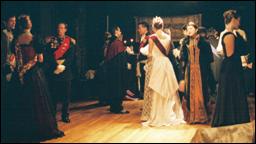
| Period Style - Edwardian Salon |
| Janice Orlandi |
| "The
most outstanding value of a Period Style class is that it produces
actors that move and live within the style of a period with total
truthfulness, vocal freedom, physical grace and ease. Actors learn to
create an expansive character free from the limits of their everyday
physical and vocal habits. Immersed in the circumstances of the place
and time of an era, the actors as an ensemble create an imaginary
world." - Janice Orlandi, SHOWBUSINESS |
A
Style Salon is an exercise that takes the student into the world of the
play creating a character from the period in which a playwright sets
the play. Students experience both the inner and outer elements of a
specific period (e.g. Edwardian).
Outer elements
of style include: the costumes, the dances, the social language, and
all of the objects that outwardly inform the student's treatment of
environmental elements such as the set and props.
Inner
elements of the style include: a sense of space, grace and ease in
formal situations, and all that creates the upper class, aristocracy,
and royal class.
The students explore the inner
and outer life elements of the characters in their gestures,
deportment, dances, etc. this work culminates in an improvisational
Period Style Salon Presentation. Because students work with images of
real people that were actually connected to one another historically,
their meeting, and the Salon itself, could theoretically re-write
history.
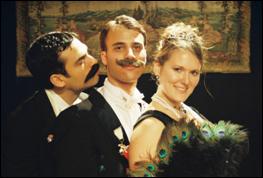 Elements covered are: Elements covered are:
- Period Character
- Period Music
- Period Costume
- Period Text
- Period Props
- Period Games
- Period Social Protocol
- Period Dance
Curriculum
includes: A Baroque and Elizabethan Period Style workshops. The
emphasis of the workshops will be on the many differences between the
eras presided over by Elizabeth I of England (1586), Louis XIV of
France (1670), and Queen Victoria of England (1894). |
|
Voice, Verse and Classical Style Text |
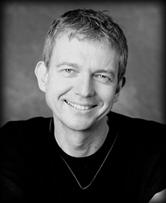
Andrew Wade (Verse Consultant on the film "SHAKESPEARE IN LOVE")
Head of Voice at the Royal Shakespeare
Company from 1990 - 2003.
Voice, Verse and Classical Style Text
“Shakespeare to Oscar Wilde” Workshop
Intensive
Master teacher and coach Andrew Wade will lead a Master class / from vocal warm-up to articulation to language and the application to text
of Shakespeare and Oscar Wilde.
|
|
| Viewpoints and Composition |
| Janice Orlandi |
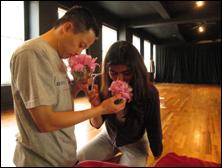 This
course will teach the basics of Viewpoints, through a series of
exercises that train the actor's ability to listen and communicate with
the whole body while developing a stronger awareness of stage space, a
sense of spontaneity, and the ability to excel as part of an
ensemble. This
course will teach the basics of Viewpoints, through a series of
exercises that train the actor's ability to listen and communicate with
the whole body while developing a stronger awareness of stage space, a
sense of spontaneity, and the ability to excel as part of an
ensemble.
Through the exploration of structured
Viewpoint improvisations (Jam Sessions) and the use of specific
compositional tools, students will learn how to transform an idea, a
few props, and a bit of dialogue into a theatrical event and create
original theatre pieces from source materials which integrate text,
story, movement and music.
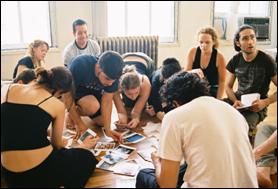 The class will cover Anne Bogart's Nine Viewpoints: The class will cover Anne Bogart's Nine Viewpoints:
· Kinesthetic Response
· Tempo
· Duration
· Repetition
· Shape
· Gesture
· Spatial Relationships
· Architecture
· Topography |
|
| Lecoq Technique for an “Actor-Centered
Theatre” |
Master Teacher: Lavinia Hart |
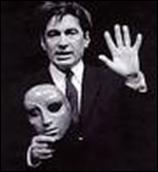 Jacques Lecoq believed in movement-based training for actors
that would equip them to be playful, spontaneous and creative. His training also
holds that the generation of ensemble is crucial to a working process that is
collaborative. His emphasis is on the actor-as creator rather than an interpreter
of text. Lecoq work is somatic and openly connected to the spectator. It is through
this visceral connection that events occur that can only happen in the medium
of live theatre. This workshop will focus on “actor-centered theatre” – with
the actor-as-creator and collaborator; by practicing the exercises and group
explorations somatically; and, finally, by maintaining an open and direct relationship
with the audience. Jacques Lecoq believed in movement-based training for actors
that would equip them to be playful, spontaneous and creative. His training also
holds that the generation of ensemble is crucial to a working process that is
collaborative. His emphasis is on the actor-as creator rather than an interpreter
of text. Lecoq work is somatic and openly connected to the spectator. It is through
this visceral connection that events occur that can only happen in the medium
of live theatre. This workshop will focus on “actor-centered theatre” – with
the actor-as-creator and collaborator; by practicing the exercises and group
explorations somatically; and, finally, by maintaining an open and direct relationship
with the audience.
Solo exercises and small group work include:
Exploration into the 4 principle elements – water, fire, wind and earth
with use of the neutral mask.
Neutral mask encounters with unlikely elements.
“Gestural Language”, silent and vocal, including figurative or transformational
mime.
“Profound Mimage” in connection with the genre, style and text of
the summer intensive: for example, finding the inner gestures of primary Edwardian
characters. |
|
| Michael Chekhov Technique |
Guest Artist Master Teacher: Mala
Powers |
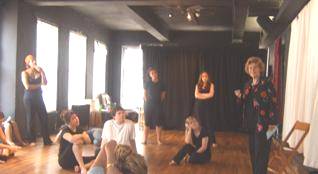 “
The psychophysical approach is most fully exemplified and realized in
the work of Michael Chekhov, considered by Stanislavsky to be his "most
brilliant student," and widely recognized as one of the greatest actors
of the 20th century. Chekhov developed an approach to acting that
affords the actor access to resources within himself-feelings, will
impulses, character choices-that are based not merely in personal
experience as they are in "Method" training, but of the actor's
imagination and physical life.” - (MICHA – The Michael Chekhov
Association) “
The psychophysical approach is most fully exemplified and realized in
the work of Michael Chekhov, considered by Stanislavsky to be his "most
brilliant student," and widely recognized as one of the greatest actors
of the 20th century. Chekhov developed an approach to acting that
affords the actor access to resources within himself-feelings, will
impulses, character choices-that are based not merely in personal
experience as they are in "Method" training, but of the actor's
imagination and physical life.” - (MICHA – The Michael Chekhov
Association)
In memory of our beloved teacher:
Mala Powers passed away, June 11 2007
We continue to teach her exercises and work as she passed them on to us. We will miss her light and beauty and remember her by continuing her life quest, to spread and teach the work of her beloved teacher Michael Chekhov. |
| |
| “Our Bodies can be either our best friends or our worst enemies.” - Michael Chekhov |
| "The
idea of the play produced on the stage is its spirit; it’s atmosphere
is its soul, and all that is visible and audible is its body” - Michael
Chekhov |
| |
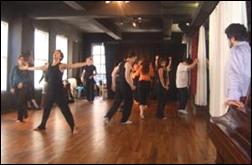 Andrei Malaev-Babel Teaching
Class in Psychological Gesture Andrei Malaev-Babel Teaching
Class in Psychological Gesture
Michael Chekhov’s Five
Guiding Principles
The Five Guiding Principles of the Michael Chekhov Acting
Technique as described by Michael Chekhov in a series of lectures given
to a group of professional actors in Hollywood. These Five principles lay the
foundation for the entire work. If these principles are practiced and understood
one has an overview of what Michael Chekhov's view of the actor is.
Students will explore Michael Chekhov's "psycho-physical" approach
to acting, through the basic principles and exercises outlined in Chekhov's
book "To the Actor", including psycho/physical exercises, character work and
ensemble improvisation. Each class begins with a warm-up specifically designed
to develop the organic connection between the actor's inner life, creative imagination
and expressive body. Through the rigorous practice of Chekhov's core exercises
students will explore; Archetypes, Imaginary Centers, Imaginary body, Character
Atmospheres, Overall scenic Atmospheres, Qualities of Movement, Imaginary Place
and Psychological Gesture, along with on camera adjustments, and more
.
The Chekhov Acting principles will be explored through
the means of psycho/physical exercises, character work and ensemble creation.
Basic Exercises: Expanding/contracting Staccato/legato,
Radiating/receiving Ease, form, beauty and a sense of the whole Molding,
floating, flying, radiating
Character Work: Imaginary center, imaginary
body psychological gesture quality and sensation
Ensemble creation: Atmosphere and Improvisation |
|
| GUEST ARTIST CURRICULUM |
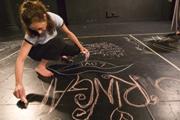 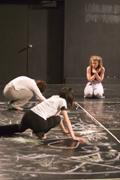 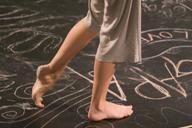
RasaBoxes™ Workshop
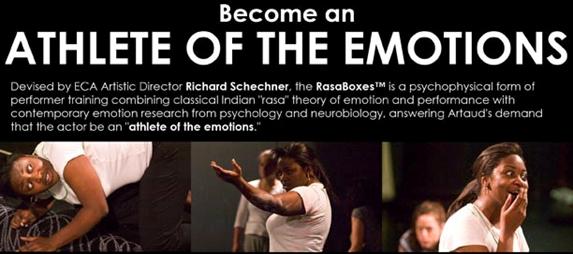
Become an athlete of the Emotions!
Taught
by Master Teacher Paula Murray Cole
|
 Participants
will be introduced to theory and philosophy of the RasaBoxes™ Vocal
and Physical techniques that support the basic steps of the exercise. Students
will learn to embody eight basic emotional states and how to
change instantly from one emotional state to another. Participants
will be introduced to theory and philosophy of the RasaBoxes™ Vocal
and Physical techniques that support the basic steps of the exercise. Students
will learn to embody eight basic emotional states and how to
change instantly from one emotional state to another. |
The Rasa Boxes™
The
Rasa Boxes are a psychophysical approach devised by ECA Artistic Director Richard
Schechner and developed by Executive Director, Michele Minnick and Director of
Education, Paula Murray Cole. Inspired by Artaud’s dictum that the actor
should be an “athlete of the emotions” and based on the classical
Indian theory of rasa, and contemporary theories of psychology and neuroscience,
the RasaBoxes train performers to generate specific emotional states in themselves
and audiences, to develop character and score performance. is a psychophysical
form of performer
training.Based on ideas and practices from the classical Indian treatise on dance/music/drama,
the Natyasastra, and contemporary studies on emotion from research scientists
such as Paul Ekman and Michael Gershon. The RasaBoxes™ is
an innovation for many Western performers. This unique approach trains them to
work holistically with mind, body and emotion to produce work that is viscerally
engaging in a wide range of performance contexts, from the subtlety of film acting
to the boldness of Commedia del'Arte, from the most naturalistic to the most
stylized or poetic, from the most text-based to pure dance and movement.
This unique psychophysical technique begins with finding form for eight basic
emotional states (fear, rage, love, wonder, laughter, the heroic/courage sadness/pity,
disgust) and their combinations through the use of body and the breath. The RasaBoxes™ is
improvisational, but offers performers specific tools and techniques for finding
truthful, fully embodied sense of presence and emotional specificity through
direct physical engagement. It integrates rather than separates acting, movement
and voice, engaging the whole performer in one approach.In this Ten hour workshop,
Paula Murray-Cole a master teacher of the RasaBoxes will lead participants through
the basic steps of RasaBoxes training, encouraging them to discover connections
between the rasic, emotional juice of feelings lived from the gut and played
out/expressed through the body, breath and voice, and the flow of action. |
|
| Fitzmaurice "Voicework" Technique |
| Catherine Fitzmaurice |
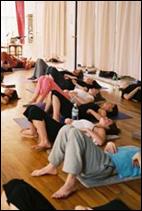 Fitzmaurice
Voicework is a comprehensive approach to voice training that can
include, as needed, work on breathing, resonance, speech, dialects,
impromptu speaking, text, singing, and voice with movement. Fitzmaurice
Voicework explores the dynamics between body, breath, voice, the
imagination, language, and presence. It encourages vibrant voices that
communicate intention and feeling without excess effort. The work
brings together physical experience and mental focus. Fitzmaurice
Voicework is a comprehensive approach to voice training that can
include, as needed, work on breathing, resonance, speech, dialects,
impromptu speaking, text, singing, and voice with movement. Fitzmaurice
Voicework explores the dynamics between body, breath, voice, the
imagination, language, and presence. It encourages vibrant voices that
communicate intention and feeling without excess effort. The work
brings together physical experience and mental focus.
Destructuring, the first phase, promotes awareness of the body, spontaneous and free breathing, and vocal expressivity.
Restructuring, the second phase, encourages economy of effort while
speaking or performing. The resulting freedom and focus allow for a
wide range of vocal expression without strain.
Physicality:
we develop awareness of patterns of vocal effort through a series of
gentle and/or rigorous exercises, accessing the body's own healing
systems for deep release.
Breath:
we explore the central role that breathing plays in both voice
production and the imagination, encouraging whole body oxygenation
without forcing the breath.
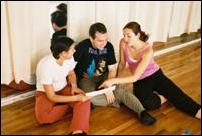 Vocal Quality:
we cultivate the ability to accurately communicate our thoughts and
feelings while meeting the demands of text, space, and the immediate
moment, through both spontaneity and choice. Vocal Quality:
we cultivate the ability to accurately communicate our thoughts and
feelings while meeting the demands of text, space, and the immediate
moment, through both spontaneity and choice.
Practical Results:
we reduce strain in the voice, increase vocal range and expressivity,
make speech easy and clear, and communicate intention more effectively,
allowing creativity to flow.
Vocal Rehabilitation: we can help to resolve many functional vocal difficulties.
|
|
| Mime |
| Bill Bowers |
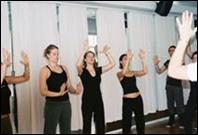 Mime
and Pantomime with BILL BOWERS offers an introduction to these art
forms, include a brief history of Mime, physical warm-up, and movement
improvisation. Participants will learn illusory skills, and have the
opportunity to incorporate mime technique into their acting work.
Ideally students will begin to gain an awareness of how pantomimic
skill and corporeal style enhance and impact actor training. Mime
and Pantomime with BILL BOWERS offers an introduction to these art
forms, include a brief history of Mime, physical warm-up, and movement
improvisation. Participants will learn illusory skills, and have the
opportunity to incorporate mime technique into their acting work.
Ideally students will begin to gain an awareness of how pantomimic
skill and corporeal style enhance and impact actor training. |
|
| Mask |
| Shelley Wyant |
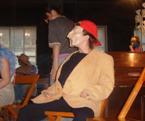 The Neutral Mask The Neutral Mask
Exploring Transformation
Transformation Exercise: A comprehensive hands-on introduction into the world of the mask.
Explore the Room: Further discoveries using the freedom provided in the mask world.
Chairs: Integration of the full body and the mask.
Character Mask: This
section utilizes the 3/4 or half mask with the actor's own mouth
exposed. With the return of the voice, a vast array of characters
populate the classroom. Actor muscles flex and develop.
The Four Stages of Man: Toddler, Adolescent, Adult, Elderly
Scale
Hinge Moments: Using
the breath and focus finding the elements that allow the body to speak.
Choreography of grand moments of change from Shakespeare,
Mythology, The Bible and Fairy Tales. |
|
| Laban and Physical Creation of Character |
| Deborah Robertson and Ted Morin |
| Using
Laban/Bartenieff Studies, with emphasis on the Laban Effort Dynamics
Workshop: All acting is physical. As we move we reveal ourselves. In
this workshop we will use elements of the work of movement artists
Rudolf Laban and Irmgard Bartenieff, primarily the effort dynamics and
spatial harmony, to support the transformation of your physicality, its
mannerism's and habits, vocal quality, alignment, rhythm, and quality
of motion, into that of your character. Please bring a monologue
and a character to explore. |
|
Margolis Method ©
Kari Margolis (TBA) |
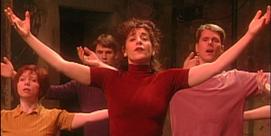 The Margolis Method is a dynamic approach to acting that expands
the actor's expressive and creative capabilities. Reflecting over twenty-five
years of studio research by award-winning theatre artist Kari Margolis, the Method
is inspired by the work of Jerzy Grotowski, Etienne Decroux and Bertolt Brecht. Margolis
Method centers on the dramatic force and emotion that emanate from the actor's
physicality, uniting instinct and creative action. Actors are trained comprehensively,
exploring and strengthening the vital connection between physical and vocal expression. Workshop
includes exercises for strengthening the actor’s physical and vocal instrument
as well as improvisation structures for developing playwriting and performance
skills. The universal principles of Margolis Method are applicable
to any theatrical style or aesthetic, ranging from abstract experimental theatre
to linear text-based plays. The Margolis Method is a dynamic approach to acting that expands
the actor's expressive and creative capabilities. Reflecting over twenty-five
years of studio research by award-winning theatre artist Kari Margolis, the Method
is inspired by the work of Jerzy Grotowski, Etienne Decroux and Bertolt Brecht. Margolis
Method centers on the dramatic force and emotion that emanate from the actor's
physicality, uniting instinct and creative action. Actors are trained comprehensively,
exploring and strengthening the vital connection between physical and vocal expression. Workshop
includes exercises for strengthening the actor’s physical and vocal instrument
as well as improvisation structures for developing playwriting and performance
skills. The universal principles of Margolis Method are applicable
to any theatrical style or aesthetic, ranging from abstract experimental theatre
to linear text-based plays. |
|
| Feldenkrais Method |
| Lesley-Ann Timlick |
This
workshop will explore many of the different Awareness Through Movement
Lessons developed by Dr. Moshe Feldenkrais, founder of the Feldenkrais
Method. These lessons will assist the student to create new forms of
movement which reduce tension and physical imbalances. The work also
promotes a clearer unity of the body and mind which may produce
movement that is more articulate, economical, dynamic and varied. In
addition, the method may help the student-actor to become more
transformational and spontaneous because he/she is no longer bound by
a limited image of the self and habitual movement patterns.
Units of Study
- Self-Image
- Pelvis
- Reaching
- Extension and bending
- Walking
- Breathing and expanding the throat
|
|
| Master Class in the Portrait Exercise |
| Gene Terruso |
Students will be guided through the various phases of “the portrait exercise”.
(developed and popularized by Bobby Lewis)
|
|
| |
|

